

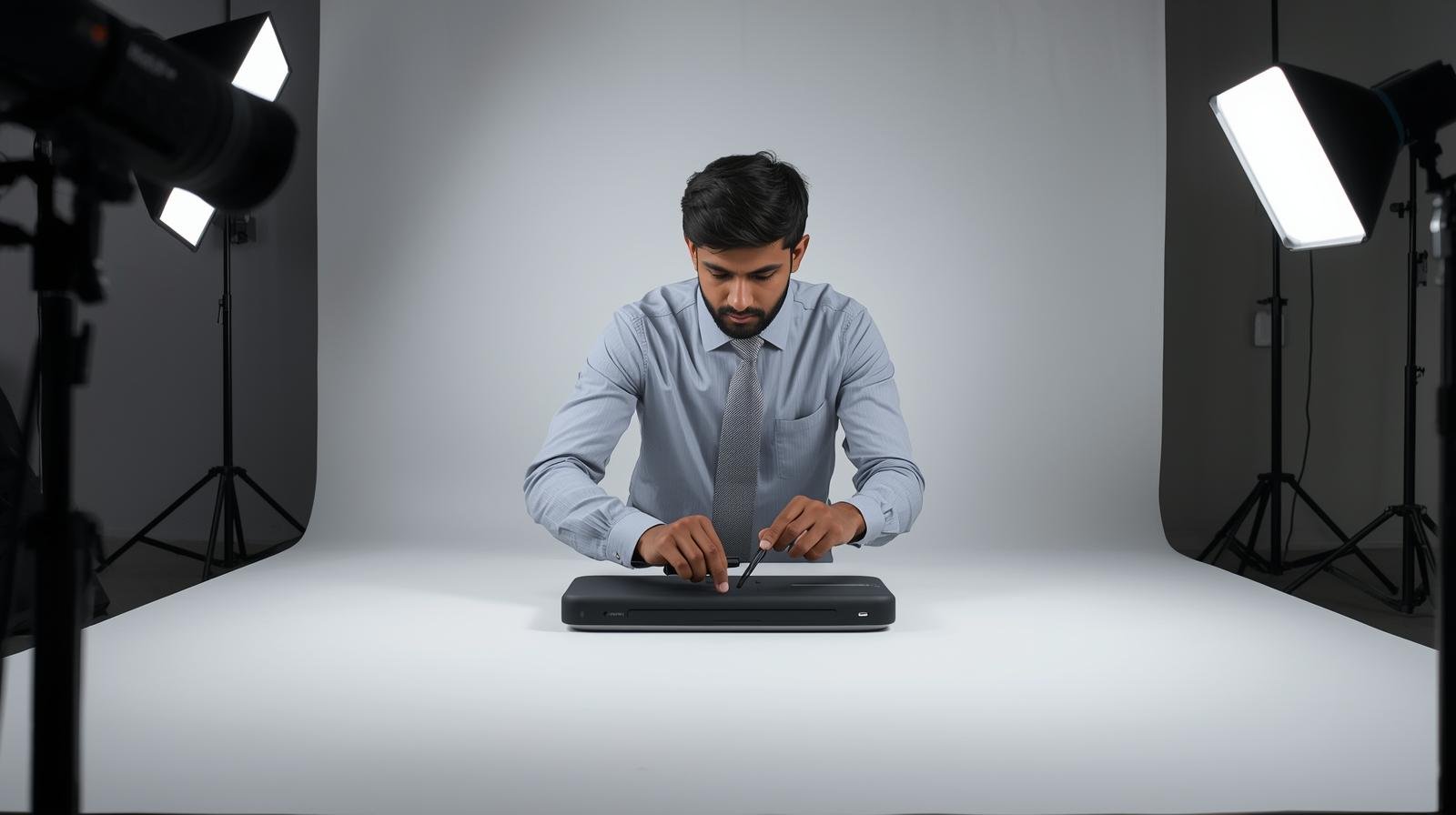
How High-Quality Product Photos Increase Customer Trust and Conversions
In a marketplace where every scroll is a split-second decision, your product image is your first handshake with a potential buyer — and a weak handshake loses the deal before a single word is read. Shoppers cannot touch, smell, or try your product online; the photograph carries the entire sensory burden. That is why partnering with a skilled product photographer in Kolkata is not a creative luxury — it is a measurable business strategy that directly impacts revenue, return rates, and long-term brand equity.
The Silent Psychology behind a Product Image
Before a customer reads your price, your delivery promise, or even your brand name, their brain has already made an emotional judgment about your product — based purely on the image. Studies in visual cognition confirm that humans process images roughly 60,000 times faster than text. A high-resolution photograph with controlled lighting, precise depth-of-field, and intentional composition triggers subconscious signals of credibility. Poor lighting and blurry edges, on the other hand, subconsciously whisper “this seller cuts corners.” Great product photography doesn’t just show a product — it narrates trustworthiness without uttering a single syllable.
Why Image Quality Is a Conversion Rate Variable, Not Just Aesthetics
E-commerce analytics consistently reveal that product pages with professional-grade imagery convert at significantly higher rates than those with amateur or stock-substituted visuals. The reason is rooted in perceived value. When a product looks premium on screen — sharp textures, accurate colour rendering, clean negative space — the buyer mentally assigns it higher worth, making the purchase feel justified. Retailers who invest in professional product photography often witness a dramatic reduction in cart abandonment, because hesitation typically stems from visual uncertainty. Every unresolved visual question is a potential lost sale.
Trust Is Built in the Details You Can Actually See
Zoom capability, multi-angle coverage, and lifestyle context shots collectively address the top three purchase hesitations: Does it look exactly as described? Is the quality real? Will this actually fit my life? When a photograph answers these questions honestly and beautifully, it replaces the need for lengthy product descriptions. Detail shots of stitching on leather goods, the grain of a wooden surface, or the matte finish of a skincare bottle — these micro-visuals are not decoration. They are the proof of promise that converts scepticism into confidence.
Consistency Builds a Brand Identity That Customers Remember
One stunning photograph is memorable. A cohesive catalogue of stunning photographs is a brand identity. When every product image shares the same lighting philosophy, background palette, and compositional logic, the cumulative effect is a visual language that customers begin to associate exclusively with your brand. This visual consistency is especially powerful on platforms like Instagram and Pinterest, where grid coherence can be the deciding factor between a scroll-past and a profile visit. Brands that treat every product shoot as a piece of a larger visual ecosystem outperform competitors who approach photography on a case-by-case basis.
Mobile Shopping Has Made Image Quality Non-Negotiable
With the majority of online purchases now initiated on mobile devices, product images are viewed on small screens at varying resolutions and under wildly different lighting conditions — a sunlit commute, a dimly lit bedroom, a bright retail environment. Only images captured and processed with professional precision retain their colour accuracy, sharpness, and visual impact across this spectrum of viewing contexts. A photograph that looks passable on a desktop monitor can appear muddy, washed-out, or pixelated on a mobile screen — instantly damaging the perceived quality of an otherwise excellent product.
The Hidden Cost of Low-Quality Product Photography
Many brands calculate the cost of professional photography but overlook the cost of not investing in it. High return rates driven by products that “looked different online,” low repeat purchase rates due to eroded trust, suppressed ad performance caused by low-engagement creatives, and lost organic reach on visual-first platforms — these are the invisible expenses that accumulate silently when photography is treated as an afterthought. The ROI of professional product imagery is not just in what it earns; it is equally in what it prevents.
Why Local Expertise Gives Your Brand a Competitive Edge
Choosing a product photographer in Kolkata means working with a professional who understands not only the technical craft of commercial photography but also the cultural visual context that resonates with your target audience in this market. At Dacfinn Creative Minds, the approach goes beyond pointing a camera at a product — it is a deliberate creative process that encompasses lighting architecture, surface styling, colour grading, and post-production refinement, all engineered to align with your brand’s visual identity and conversion goals. Local proximity also enables faster turnaround, easier creative collaboration, and the ability to iterate quickly based on campaign performance.
Great Photography Is a Long-Term Brand Asset
Unlike paid ads that disappear the moment your budget runs out, high-quality product photographs continue working for your brand across every channel — your website, your social media, your marketplace listings, your email campaigns, and your offline collaterals — for years. They are compounding assets. The cost is incurred once; the returns accumulate indefinitely. For brands serious about sustainable growth, investing in exceptional product photography is not an expense line — it is a foundational brand-building decision that pays dividends with every impression, every click, and every conversion it generates long into the future.